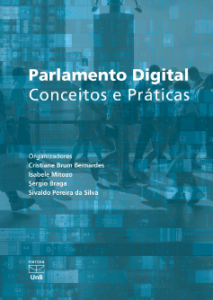
Edited by leading researchers in legislative studies, “Parlamento Digital: conceitos e práticas” (“Digital Parliament: Concepts and Practices”) examines aspects of the digitization of representative institutions, with a focus on new possibilities for relationships between legislatures and citizens.
The book brings together contributions from leading Brazilian and international researchers on the subject who belong to the international research network of the National Institute of Science and Technology in Digital Democracy (INCT.DD). It was edited by four Institute researchers: Cristiane Brum Bernardes (Chamber of Deputies), Isabele Mitozo (UFMG), Sergio Braga (UFPR), and Sivaldo Pereira da Silva (UnB).
You can download the book free of charge here.
Parlamento digital: conceitos e práticas
Editors:
Cristiane Brum Bernardes
Isabele Mitozo
Sérgio Braga
Sivaldo Pereira da Silva
Abstract:
Any analysis of the institutional and political landscape of the 21st century must take account of the growing use of the internet by political actors in most countries. For parliament, a central institution in representative democracies as we know them, perspectives and trends point in the same direction. Representatives, institutional actors, citizens, and civil society organizations use different platforms with the specific aim of influencing political decisions, in a process described in research as “digital democracy”. Over the past two decades, the faster digitization of politics worldwide, especially as political actors and institutions enter social media, has created new complexities in relationships between legislatures and citizens. This is one focus of the book, which addresses different aspects of digitization in representative institutions.